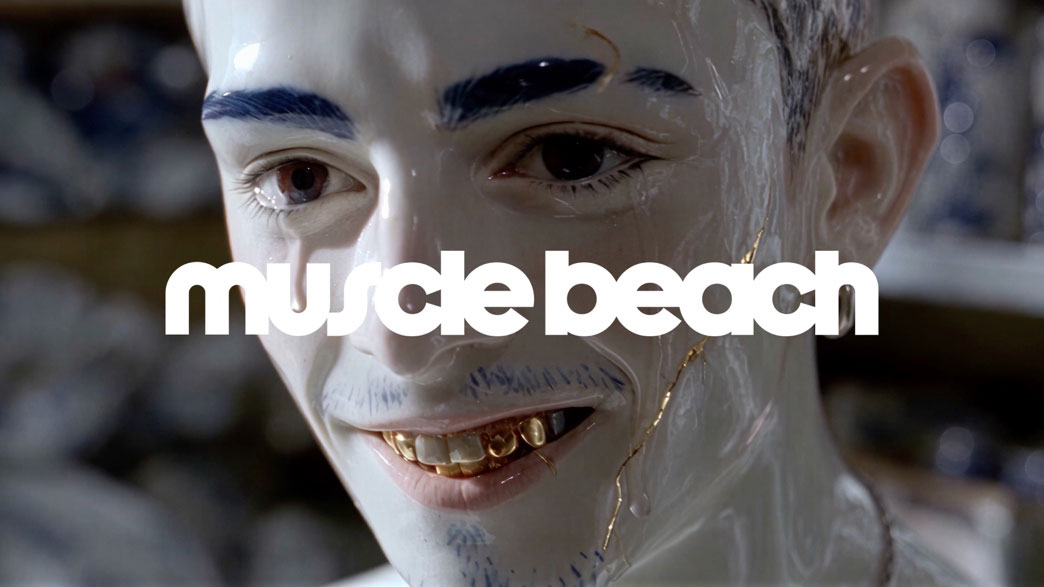

New Production Studio Muscle Beach Makes its Debut
October 10, 2026
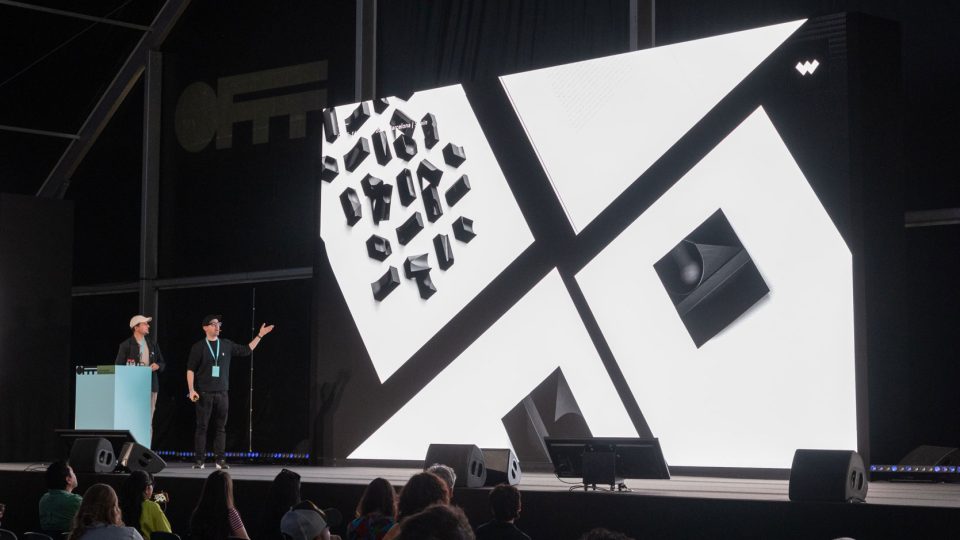
OFFF Barcelona 2026 provided the perfect opportunity to get to know Javier Vallejo, CD at Madrid-based JVG, a studio whose work we have included in the Stash Permanent Collection four times in the last 18 months.
This follow-up interview provides great insights for anyone looking for straightforward advice on the challenges and realities of running a studio in today’s turbulent economics.
Javier Vallejo: The industry’s real opening is to stop treating AI as a budget-saving shortcut and start employing it within professional pipelines to unlock entirely new visual languages and technical results that were simply unattainable until now.
Currently, it is largely misused to generate low-value content or as a cheap substitute for CGI and live action. And while visionary artists are already exploring AI to achieve previously impossible outcomes, the true opportunity lies in bringing this sophistication into high-end commercial productions to elevate the standard of craft.
“The most pressing challenge is the sustained contraction of work volume and the increasing difficulty of securing new projects, a trend that has been intensifying for at least the past three years.”
The most pressing challenge is the sustained contraction of work volume and the increasing difficulty of securing new projects, a trend that has been intensifying for at least the past three years. This shift is partially driven by large advertising and communication holding companies integrating their own in-house production units, which effectively absorb the vast majority of the workload that was previously outsourced.
The democratization of 3D software, combined with the accessibility of generative tools, has led to an exponential increase in the number of emerging studios. This market saturation has created a hyper-competitive environment where securing stable, high-quality commissions is becoming progressively more laborious and uncertain.
We don’t follow a predetermined roadmap; instead, we rely on the organic evolution that has defined our studio’s trajectory since the beginning. If you analyze our body of work, there is a clear, consistent progression in both quality and complexity year over year. Because we have never been driven by fleeting trends or fashionable aesthetics, there isn’t a specific style or practice we feel the need to leave behind.
Similarly, we have no intention of forcing the integration of new tools simply because they exist. Our approach is to let the work dictate the medium. This year, we will continue to let our craft evolve naturally, focusing on pushing the boundaries of art direction and seeking to contribute something meaningful to the design landscape.
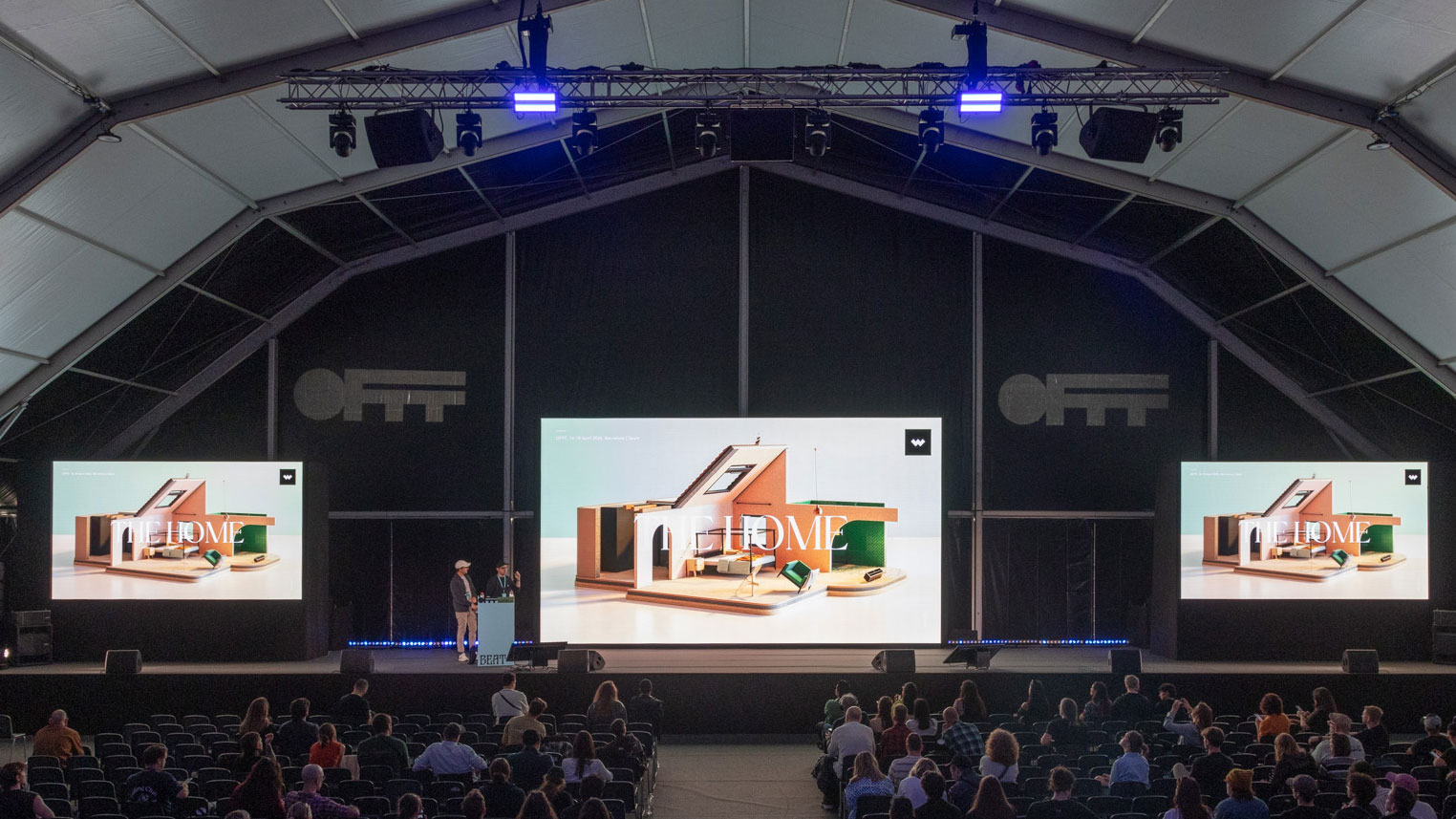
Javier Vallejo and Guillermo Llano Carretero of JVG on the Beat stage at OFFF Barcelona 2026
As a direct consequence of the market saturation and lowered barriers to entry mentioned in a previous response, clients and agencies now have significantly more leverage. In recent briefs, this manifests as an aggressive push for much tighter schedules and lower budgets.
“Since this downward pressure has become an established market reality, our strategy is to double down on our specific aesthetic and art direction, ensuring the level of quality offsets these demand.
In practice, our use of these tools is very limited. While AI is undeniably effective for securing pitches — as quickly refining a client’s reference to impress them is often the path of least resistance — we generally prefer to avoid this shortcut. If a final production is intended to be 3D, we believe the pitch should also be 3D.
Our core strength lies in our ability to produce high-end, sophisticated visuals within exceptionally tight turnarounds, and we want to demonstrate that technical capacity from the very first interaction.
The only exception is when a project is designed to be executed entirely through AI. We are currently working on several such productions, though we have yet to publish any of this work. Beyond these specialized cases, our use of AI is restricted to LLMs for day-to-day studio management and administrative tasks.
“The most profound shift by 2027 will be the complete dissolution of the distinction between “AI-generated” and “manually created” work.”
To be honest, we don’t really experience those “breakthrough” moments anymore. While new tools and techniques emerge daily with incredibly impressive demos, the reality of putting them into practice is usually far more difficult.
It is undeniable that the technology is evolving at an unprecedented pace, and what will be possible in just a few months remains unpredictable. However, because we are constantly navigating this gap between promise and performance, we aren’t easily surprised. We prioritize the operational reality of a tool over the initial hype.
The most profound shift by 2027 will be the complete dissolution of the distinction between “AI-generated” and “manually created” work. This concept will effectively cease to exist for two reasons. First, a new generation of designers is emerging for whom AI will be their primary, or even only, known toolset.
“Second, top-tier studios will leverage these technologies to deliver the most stunning, visually groundbreaking projects imaginable. When the output from leading names is that incredible, you have no choice but to accept its brilliance, completely erasing any lingering stigma.
Plus, we will see a total technical convergence. Every piece of production software we use — from 3D modeling and animation suites to simulation tools and render engines — will have AI so deeply embedded into its core architecture that drawing a line between manual labor and automated generation will be impossible.
The “AI vs. Non-AI” debate will become obsolete as the technology transforms into an invisible, ubiquitous component of the entire creative workflow.
Follow Javier Vallej and JVG on LinkedIn and Instagram
Buy JVG’s 10th anniversary book HERE.