

Meet PATHOS, the New German Agency With Plenty of Attitude (and a Really Long Press Release)
October 20, 2026
From the release:
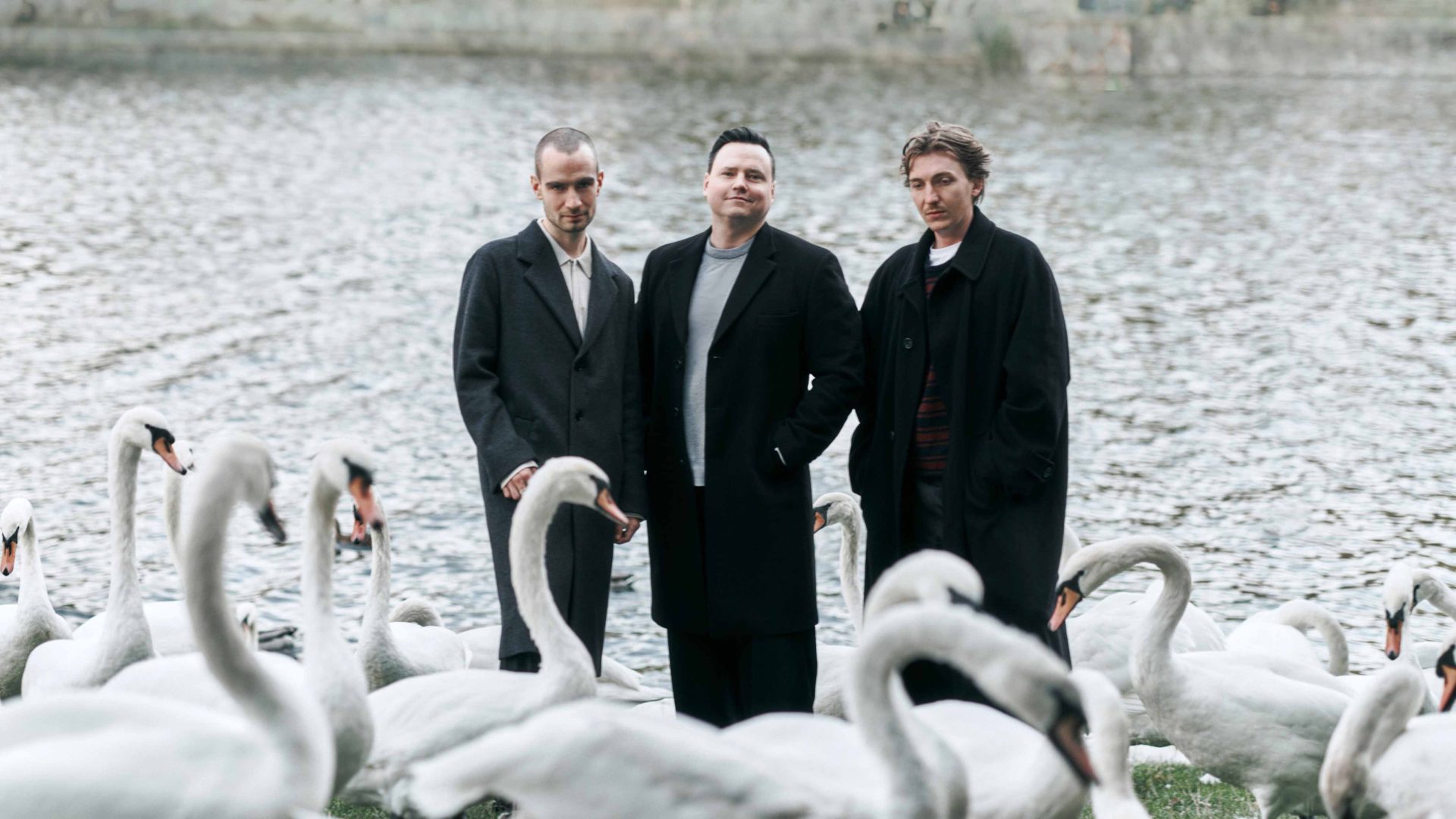
Kevin Claus, Felix Ebell and Finn-Jordan Max are launching PATHOS, a Hamburg-based agency specializing in branded entertainment. The agency launches with renowned clients and a blunt view on their industry: advertising isn’t dying. But much of what calls itself advertising deserves to die.
Hamburg, 20 October 2026. When you scroll through social media today you’re drowning in content, but almost none of it is worth watching again. For Kevin Claus, Felix Ebell and Finn-Jordan Max, that is the real problem, facing an industry that has spent years worrying about dwindling attention spans, new platforms, artificial intelligence and its own supposedly imminent demise.
With PATHOS the three are founding an agency that focuses on branded entertainment. Not because the world needs yet another ad agency, but because it needs advertising that’s worth watching again. Less annoyance. More PATHOS.
While the industry keeps declaring itself dead, with prominent voices such as Amir Kassaei repeating “It’s over” like a mantra, PATHOS has a different diagnosis: maybe advertising isn’t done for good. Maybe too much of it just isn’t any good.
For the founders, TikTok, shrinking budgets and AI are not the main culprits. The industry’s problems are largely self-inflicted: generic ideas, timid execution and increasingly forgettable work churned out faster and cheaper. AI did not create the problem. The flood of cheap AI slop has simply made it bigger and harder to ignore.
So what fancy new solutions can a newly founded agency like PATHOS bring to the table? None. Because they believe in a 2000 year old approach by none other than Greek philosopher Aristotle. Admittedly, it has been a while since his last campaign.
Aristotle described three ways to persuade people: logos, ethos and pathos. He saw pathos, the appeal to emotion, as the most powerful and dangerous of the three. After all, making people feel something is the strongest way to win them over.
For an industry fixated on business solutions, engagement rates, CPMs, CTRs and growth hacking, it is a reminder of an age-old truth: emotions are what moves people. It is also what gives PATHOS its name.
“My parents told me they used to go to the cinema to watch compilations of Cannes-winning ads. Voluntarily! To them, advertising was entertainment. Now some people hate advertising so much that entire businesses are built around paying them to avoid it,” says PATHOS Managing Director Kevin Claus. “That says a lot about how far our industry has fallen. Advertising needs to entertain people again, move them, or at least make them feel something other than the immediate urge to throw up. We want to put everything we’ve got into turning that around.”
Lazy project managers and a lack of production know-how kill good ideas.
PATHOS sees its role as more than coming up with ideas. In the founders’ view, the creative industry is rarely short of them. The trouble starts later, in endless rounds of approvals, budget negotiations, production and presentations that gradually turn a bold idea into a “safer one”, then into something utterly forgettable.
“In our industry, good ideas die at an alarmingly early stage,” says Co-Founder & Executive Creative Director Finn-Jordan Max. “Not because they wouldn’t work, but because, somewhere along the line, nobody is willing to keep fighting for them or put in the effort it takes to get them produced.”
PATHOS puts that commitment into practice with a focus on branded entertainment. The founders are avid fans of music, gaming, television and film. They understand the stories, cultural references and communities in each of those worlds. Their track record shows that they know how to apply this knowledge to create branded entertainment that people actively want to watch, play or spend time with.
A beautiful pitch deck that promises the world and ends up in a drawer is not enough. From the outset, PATHOS works out how even its biggest ideas can be made within the budgets and with the available resources. It takes responsibility from the initial idea to the finished work.
If you sell entertainment, you have to be entertaining.
PATHOS is putting that principle to work in its own launch campaign. The founders could have posed in front of a concrete wall, staring solemnly into the camera. Instead, they have made a provocative piece of entertainment starring Jürgen Milski, a German reality TV personality and presenter associated with the country’s notorious phone-in quiz shows.
The film spoofs the state of advertising in the style of Germany’s old phone-in shows and trash TV, particularly 9Live, a now-defunct channel notorious for expensive tv games.
In the film the founders each try to explain PATHOS in their own way, descending the shoot into chaos: their attempts go nowhere, Milski lines his pockets and the trio find themselves in a dramatic brawl. Perhaps that says more about PATHOS than any of their explanations could.
A few familiar figures from the advertising industry get roasted along the way, with their faces pixelated just to be safe. The film also takes aim at the industry’s seemingly endless declarations that “It’s over”.
“Of course you can launch an agency with three headshots and a press release. That approach has served the industry surprisingly well. But if you’re advising brands to entertain people, you ought to hold yourself to the same standard,” says Co-Founder & Executive Creative Director Felix Ebell. “We want PATHOS to be an entertainment brand in its own right, from day one. The film is more than a launch stunt. It is the start of our own ongoing entertainment campaign.”
The launch still comes with a press release and a press photo, obviously. No need to make life unnecessarily difficult.
The film was produced by cndy Film, with Thomas Cervenca and Clemens Hillinger handling direction and cinematography. 2WEI Music provided the score: an epic arrangement of “Ständchen” (“Serenade”) from Schubert’s Schwanengesang (“Swan Song”), a musical nod to the agency’s logo.
The agency is led by Managing Director Kevin Claus and Executive Creative Directors Felix Ebell and Finn-Jordan Max.
Claus started his advertising career as an apprentice at Jung von Matt. After a stint at Kolle Rebbe, now part of Accenture Song, he returned to Jung von Matt. Most recently, he spent seven and a half years at Jung von Matt SPORTS, overseeing areas including gaming and esports. It was there that he met Ebell and Max.
Over the past few years, Ebell and Max have worked together as freelancers for some of the largest agencies in Germany and internationally. They developed entertainment projects and brand communications for companies including Samsung, adidas and Netflix. For the streaming giant, this work included creative concepts for the launch of German original series. They are now continuing that work with PATHOS.
PATHOS has no plans to stay in start-up mode for long. They are already assembling a permanent team of strategists, project managers and creatives, ready to work at their office in Hamburg’s historic Zippelhaus in January.
More to the point, PATHOS isn’t launching with a case study about the making of their website, but with a client that knows exactly what it wants from the agency.
Sparkasse, Germany’s nationwide network of public savings banks, is one of the agency’s launch clients. Claus has played a key role in its gaming and entertainment work in recent years, including as lead on the horror game “Schwein Gehabt”. The game attracted attention across Germany last year and was featured internationally by Ads of the World. PATHOS will build on that work with Sparkasse, further evolving the brand’s branded entertainment engagement.
What comes next? PATHOS wants to grow. The long-term goal is to build a European agency, working from Hamburg with a particular focus on international brands looking to entertain audiences across Europe. It is seeking long-term partnerships with brands that want to make entertainment a permanent part of their communications.
The agency does not believe traditional advertising will disappear altogether, or that AI will automatically save or destroy the creative industry. Its message is less convenient for the industry: if it wants people to care about advertising again, it will have to start producing better work.
Put simply: the industry needs more PATHOS.