




Ryan Romans Joins MAKE as Director of Creative Partnerships
April 1, 2026
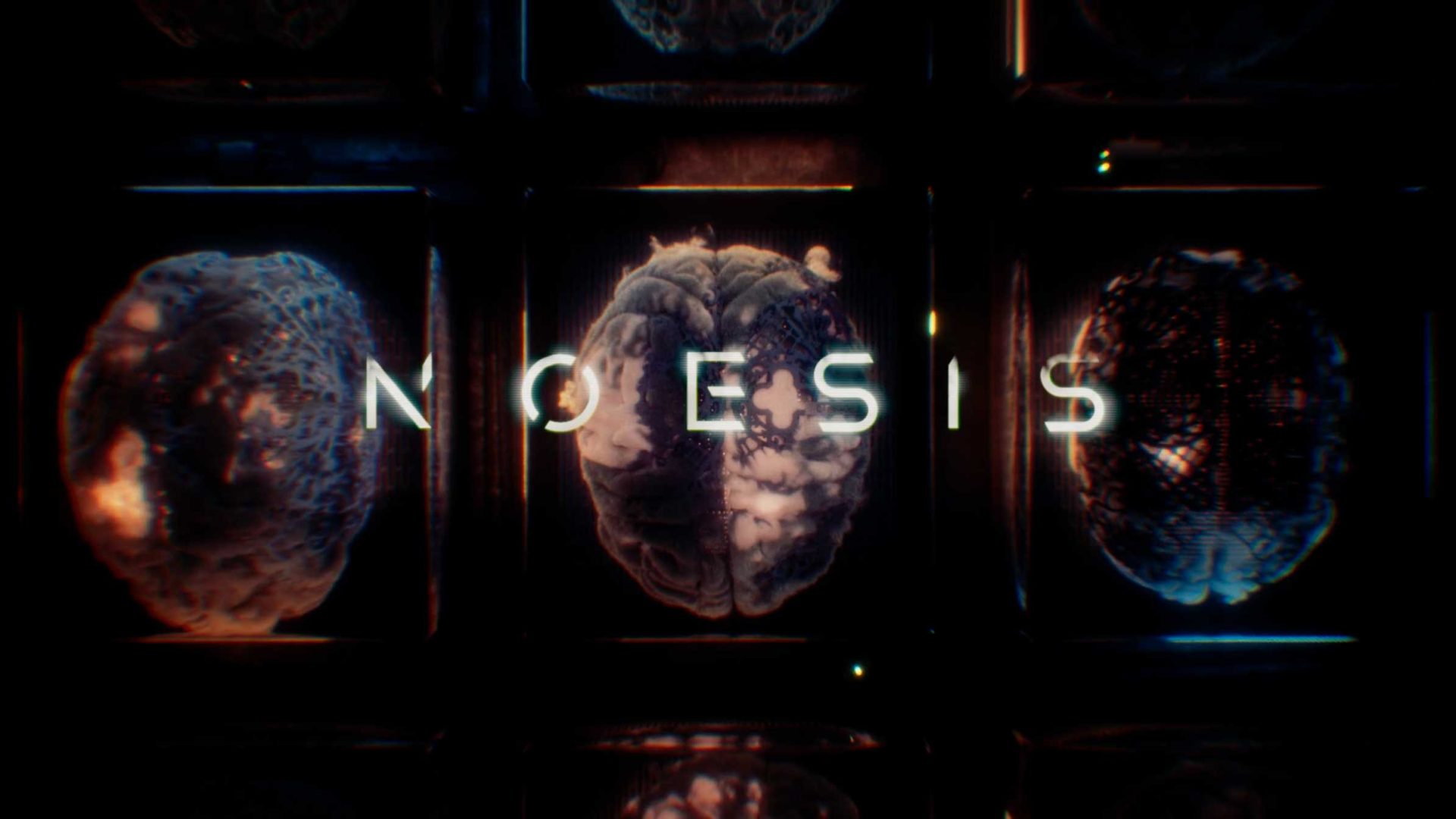
Artashes Stamboltsyan, lead CD/motion artist at Triada Studio, just dropped us his enigmatic titles (and BTS) for a spec sci-fi series “where memory and consciousness are extracted and preserved like radioactive artifacts.”
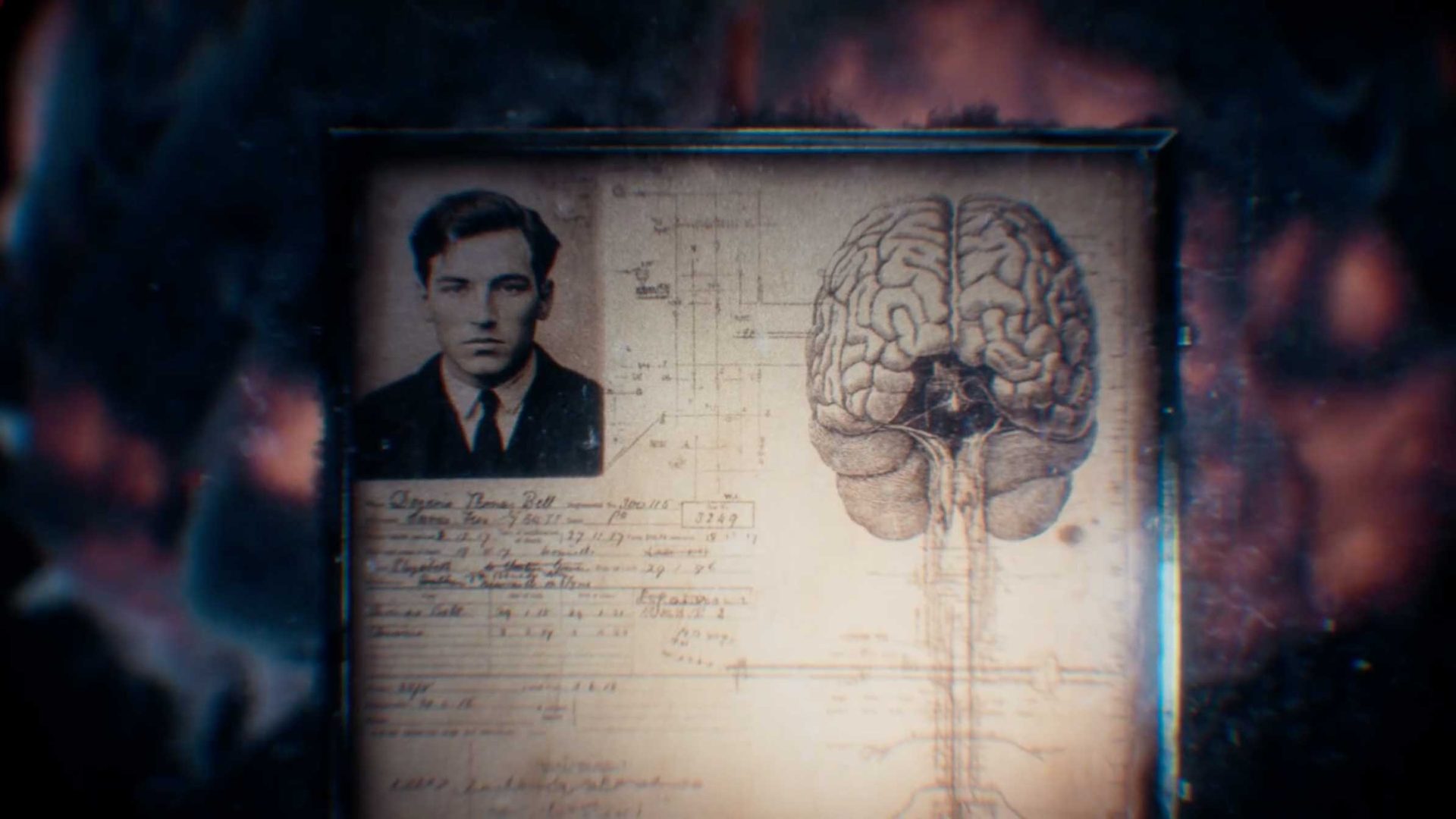
Artashes Stamboltsyan: “My goal was to create a visual prelude that feels meditative and clinical, caught between archival documentary and existential dream. Rather than offering exposition, the sequence acts as a threshold, evoking a world where intellect is separated from identity and knowledge becomes a fragile, material trace.
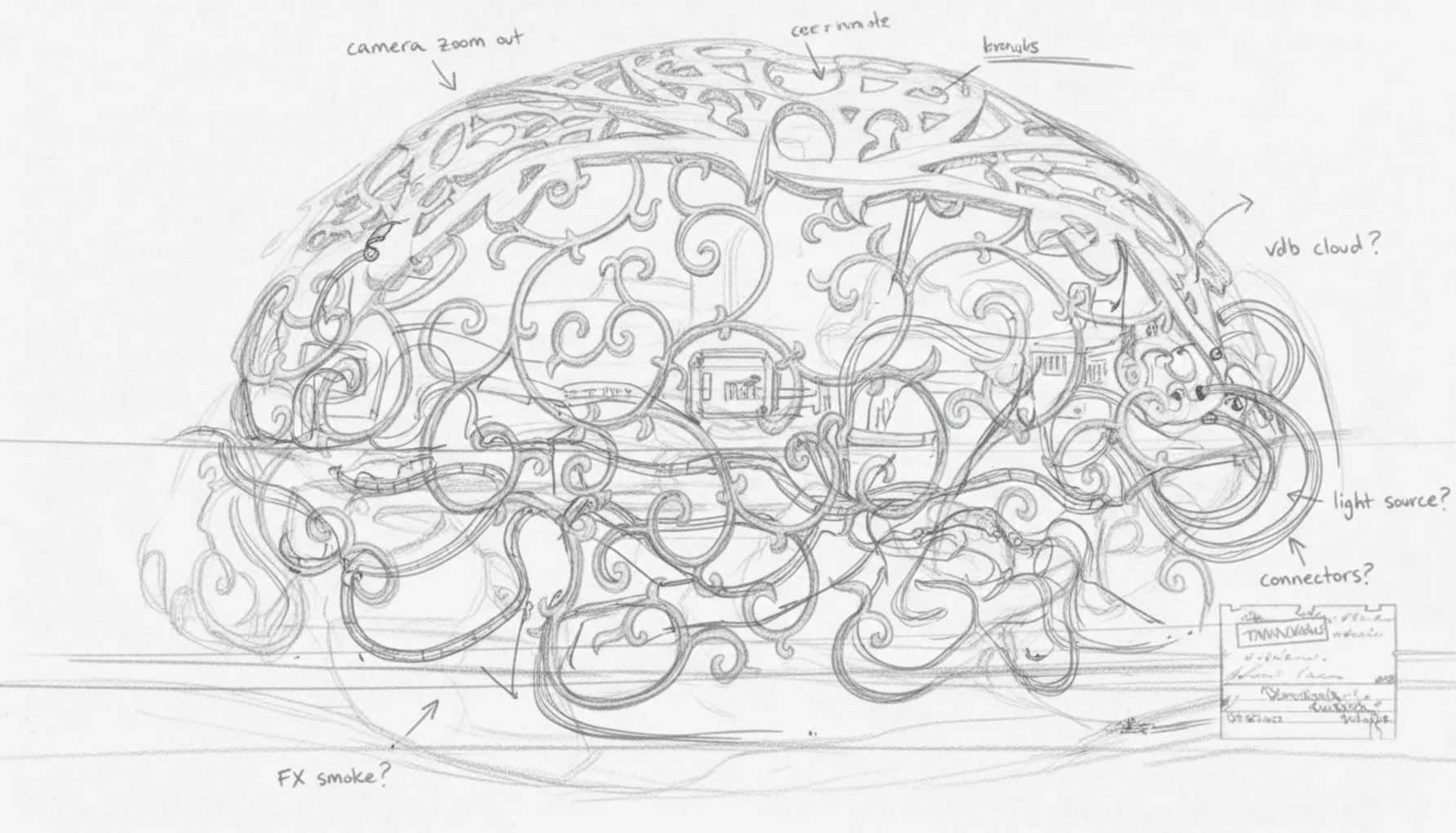
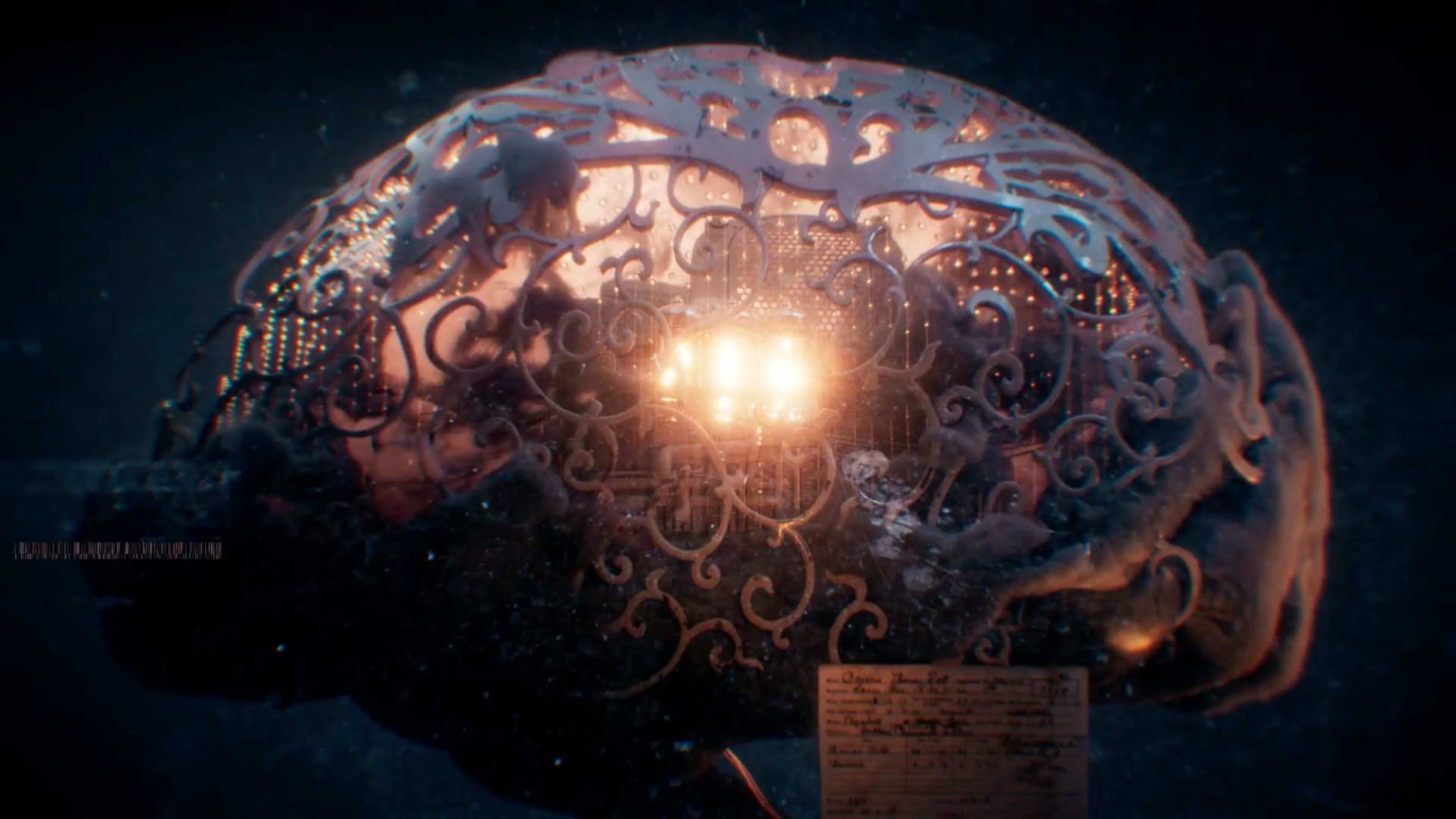
“The main creative challenges was defining a visual language for ‘extracted cognition’ without leaning into literal or grotesque imagery. The brains were treated less as biological objects and more as preserved artifacts.
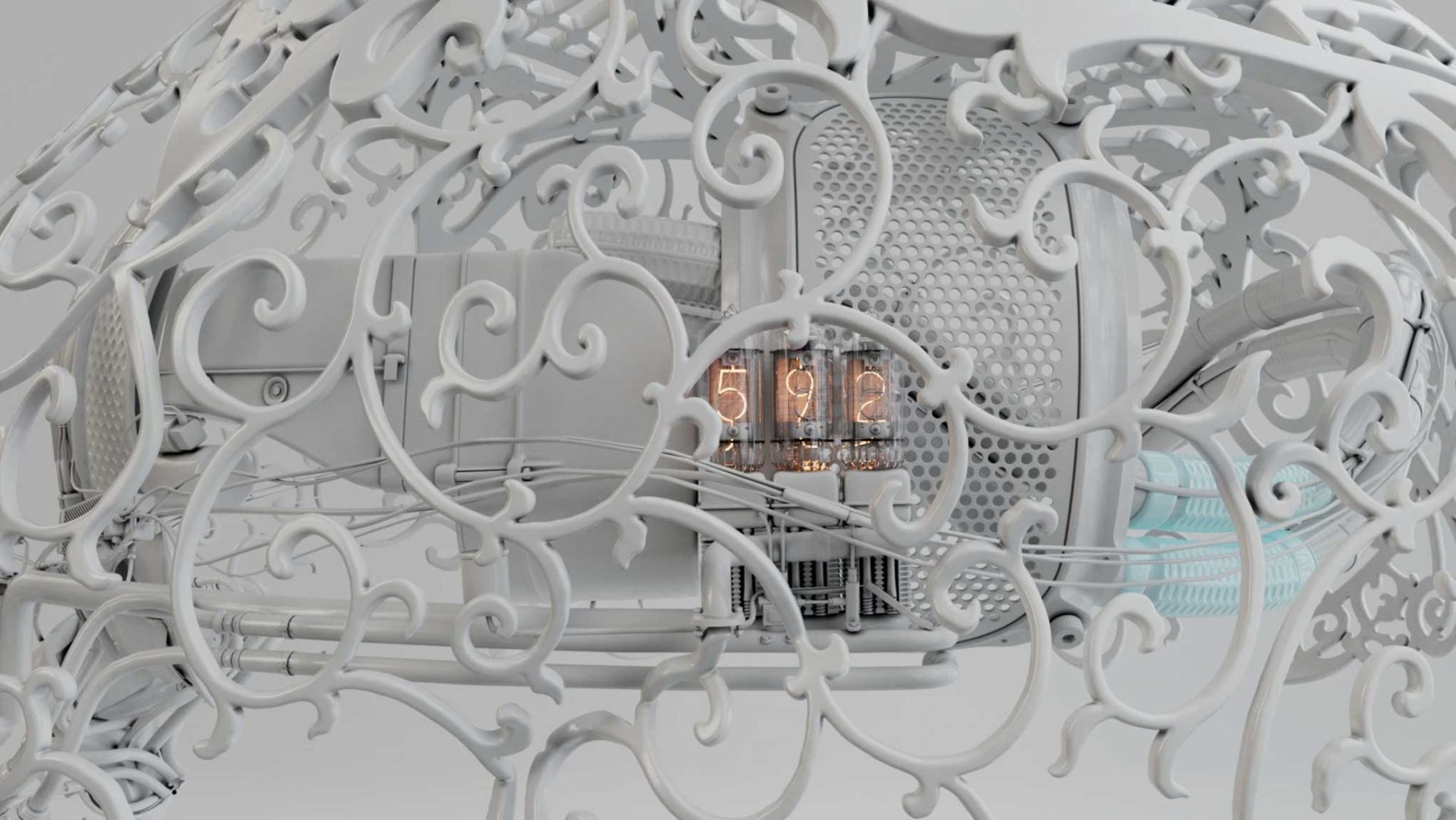
“The wrought iron lattice around the brains introduces a contrast between ornamental, almost ceremonial forms and a cold, technological environment. That tension helped ground the project in a retro-industrial aesthetic rather than conventional sci-fi.
“The sequence acts as a threshold, evoking a world where intellect is separated from identity and knowledge becomes a fragile, material trace.”
“Technically, the biggest challenge was managing scene complexity. Each chamber combines dense filigree geometry, internal mechanical structures, glass volumes, Pyro smoke, and practical-style light sources like Nixie tubes.
“Once animated, the risk of visual noise was high. The solution was restraint: minimal camera movement, controlled depth of field, and a lighting setup that shifts subtly to shape reflections rather than overpower the scene. Rendering in Octane within an ACES pipeline helped maintain clear luminance separation between warm internal elements and the cooler ambient space.
“Given the density of geometry and volumetrics, rendering locally would have significantly slowed iteration. Leveraging the RNDR Network allowed me to distribute Octane renders across decentralized GPU nodes, making it possible to handle the complexity of the scenes while maintaining reasonable turnaround times.
“All modeling, animation, texturing, lighting, and rendering were done in Cinema 4D. Editing and initial color grading took place in DaVinci Resolve, where timing and pacing of shots were refined. Final compositing and additional color grading were completed in After Effects to unify the visual style and add subtle finishing touches.”
Director/animator: Artashes Stamboltsyan