




Director Liam Archibald Signs to Blinkink Roster for Worldwide Commercial Representation
August 27, 2026
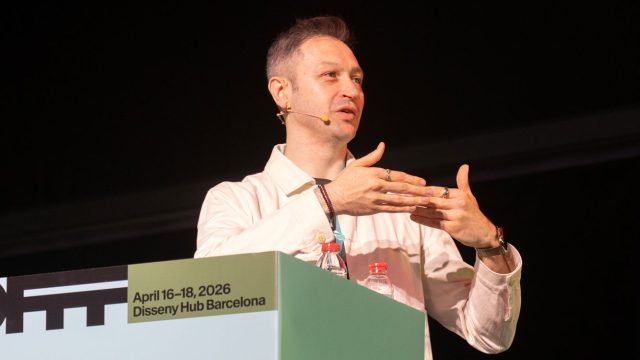
In this week’s installment of his weekly series of Stash editorials, Nerdo ECD Claus Cibils examines the need for fairness and clarity in the creative pitching process and how holding the line can help achieve both.
Remember your first pitch? Everything was new. Excitement. Adrenaline. You had no idea what to expect. Funny thing is, years later, it still feels almost the same. But different.
Back then, you did not know what to expect. Now, you do. The missing answers. The unclear budget. The impossible timing. The rules that appear halfway through the game. Everyone saying yes before anyone has asked what yes actually requires. Total anxiety mayhem.
Experience should change something. We know what needs to be clear. We know which questions must be answered. And we know what happens when nobody is willing to ask them. That is when we hold the line.
“A fair environment starts with those running the pitch. But it only holds when everyone entering it protects it.”
A pitch does not appear out of nowhere. Before anyone is invited, someone has already made enough decisions for it to exist. There is a product, a strategy, a business objective, an ask, a schedule, a budget, and a decision waiting at the end.
The information may still be moving, but someone has it. This is where responsibility begins. All is fair in love and war. Pitching is neither. Somehow, it can feel like both. It is definitely work. And fairness has to be built into it.
A fair environment starts with those running the pitch. But it only holds when everyone entering it protects it.
The client sets the starting conditions: the product, the strategy, the ask, who needs to approve it, how the decision will be made, the deliverables, and the time and budget available to make it real.

If something is unresolved, say so clearly. Clear uncertainty can be managed. Hidden uncertainty becomes someone else’s risk. That is the first line. Everyone should know what they are committing to and what they can expect in return.
The agency occupies the most complicated position. When pitching to win a client account, the agency is a participant. It must push upward, ask for what is missing, challenge conditions that do not work, and state what its participation requires.
When that agency brings studios, directors, or creators into the process, its role changes. It is now running a pitch. That means securing the answers, translating them clearly, and protecting the conditions downstream. If an answer is missing, the agency must push upward for it. Passing uncertainty down does not resolve it. It simply relocates the risk.
The agency sits in the middle. It must do both. Makers have to hold the line from the other direction. Studios, directors, producers, freelancers, and creators must name what is missing, be clear about what their yes requires, and ask the questions that need to be asked.
“A pitch should compare ideas, not each participant’s ability to absorb chaos.”
The questions will change from pitch to pitch. The right and responsibility to ask them should not. Keep asking until it is no longer uncomfortable. A professional yes can have conditions. Yes, we will pitch.
Here is what that yes requires. Not everyone enters a pitch with equal power. That makes responsibility more important, not less. The more control you have over the process, the more responsibility you have to keep it fair.
The line does not disappear once the work begins. If the ask changes, name the impact and agree on what needs to move with it. A pitch should compare ideas, not each participant’s ability to absorb chaos. If the process rewards silence, guesswork, or unlimited flexibility, the best idea is no longer the only thing being judged.
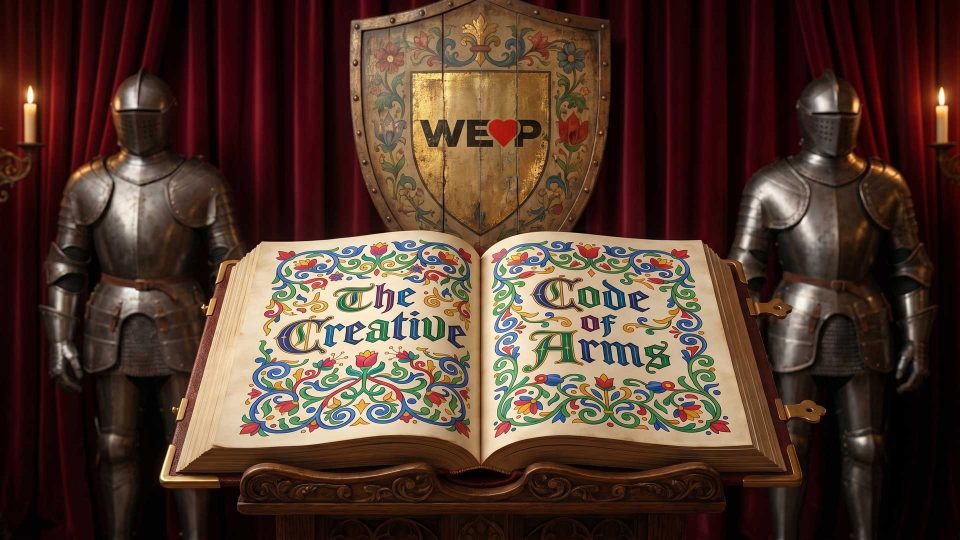
That is the Code:
– If you run the pitch, set the line.
– If you enter the pitch, hold the line.
– If you sit in the middle, do both.
That is how fairness becomes a system. From the top down. From the bottom up. Hold the line and let the best idea win.
Follow Claus on LinkedIn and Instagram.
WE LOVE PITCHING: Let’s change the way we play the game.
DISCLAIMER: All images are AI-generated. If it feels real, uncomfortable, or a little ridiculous, it’s intentional. Artificially made. Human crafted.