



Not To Scale Welcomes Jovardi for US Representation
October 19, 2026
Nerdo ECD Claus Cibils continues his series of Stash editorials on the state of the creative pitch with a look into the crucial role that collaboration should play throughout the process.
Everyone is hyped. It is the first call of what might become an amazing journey. The brief is presented. The guidelines are clear: timeline, budget, competitors, even the brand book. Creative input is welcome. There is time for Q&A. Every item on the checklist is covered.
We all leave the call informed, aligned, checkpoints scheduled, expectations set, and ownership clear. Or is it? The urban legend says this version of collaboration exists. It does. It should. It is rare, but not impossible. It just isn’t the default.
The reality is that collaboration fades under the pressure of parallel deadlines, layered approvals, and compressed attention. Responsibilities fragment, context thins out. The process keeps moving, and creative exchange gets killed without a trace.
Of course, when the pitch window is four days, even a simple checkpoint gets labeled as luxury.
“The reality is that collaboration fades under the pressure of parallel deadlines, layered approvals, and compressed attention.”
The result is that collaboration becomes a chain of deck updates rather than an exchange, if it even gets that far. The deck carries every idea, doubt, decision, and assumption. It travels without the people who built it in the room.
Questions are answered, but not always explored. Decisions are made, but not always fully explained. This is what happens when collaboration is confused with coordination. Coordination keeps the process moving. Collaboration keeps the idea evolving.
The shift is subtle: conversations become mechanical, efficient, and slightly less human. A linear process does not automatically create idea exchange, and sitting in a feedback meeting does not guarantee dialogue.
The message is clear, even when nobody says it out loud: real collaboration is scheduled to begin after the pitch is awarded. The selected treatment will evolve, and the details will be solved later.

This logic misses the point. The pitch is the initial phase of the project. It is where trust begins, where direction is tested, and where the first version of alignment is built. At this stage, collaboration has a job: sharpen the proposal before the work is judged. That means guidance has to arrive while we can still use it.
Creators are professional tourists in the best sense: new to the territory, trained to spot what insiders may miss. They bring fresh eyes, visual instinct, storytelling, craft, and the ability to turn context into a point of view. But even the best tourists need a map.
Clients and agencies bring the compass: insights, brand knowledge, goals, constraints, audience realities, internal pressures, risk appetites, and the real reasons behind the ask. The job is to make the terrain visible while the work evolves.
But when speed is the thing everyone protects most, and compression gets mistaken for respect and consideration because the pitch is unpaid, the process starts to lose its north.
“Before a pitch begins, collaboration needs a clear agreement: expectations, timing, context, guidance, ownership, feedback, decisions, questions, and how direction will move.”
Time is not just a scheduling and resource issue. It is the cornerstone that allows collaboration to thrive. Forty hours in one week is not the same as forty hours across two or three weeks. One can consume the whole week. The other can give creators room to think, manage existing work, have a life, let the idea rest, and choose how to commit properly.
Rush creates a strange contradiction: everyone wants the perfect pitch, but the process rarely gives the idea enough time to build, rest, return, and sharpen.
Before a pitch begins, collaboration needs a clear agreement: expectations, timing, context, guidance, ownership, feedback, decisions, questions, and how direction will move. It is a working path built with respect for time, context, and authorship.
When that path is clear, creators can use guidance instead of guessing around it. Agencies can protect the process instead of translating it endlessly. Clients can judge the work with a better understanding of how it was built. If the proposals do not create a real choice, the process is serving something other than the project.
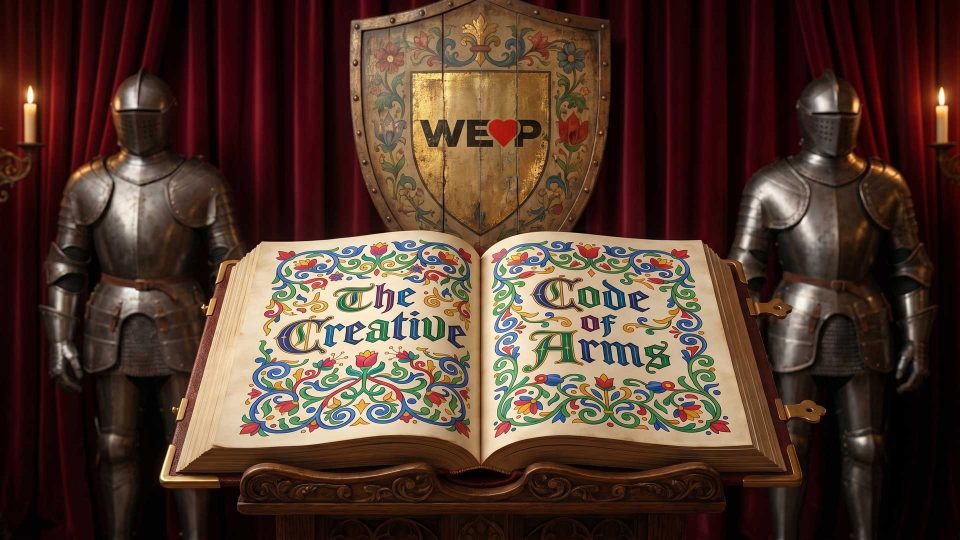
That is the Code:
Collaboration is a condition, not a courtesy. Protect the process before judging the work.
Collaborate, collaborate, collaborate.
Follow Claus on LinkedIn and Instagram.
WE LOVE PITCHING: Let’s change the way we play the game.
DISCLAIMER: All images are AI-generated. If it feels real, uncomfortable, or a little ridiculous, it’s intentional. Artificially made. Human crafted.