


Fight for Kindness Poster Exhibits Launch Nov 13 in 5 Cities
October 22, 2026
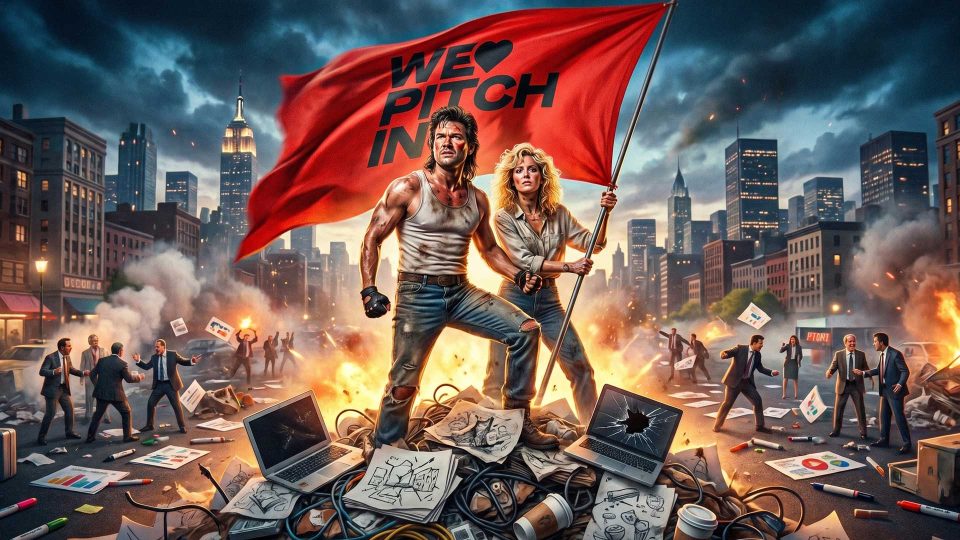
In this week’s edition of his ongoing series of Stash editorials examining the ecosystem of creative pitching, Nerdo ECD Claus Cibils considers how and why the process has come to operate in a constant state of emergency.
When I was around ten, I remember watching real surgical procedures on Diagnóstico, on VTV Channel 8 in Venezuela. Real doctors. Real patients. Real operating rooms. Real stakes. I watched every operation they showed, which probably explains a few things now that I think about it. Apparently, I was fine with the visuals.
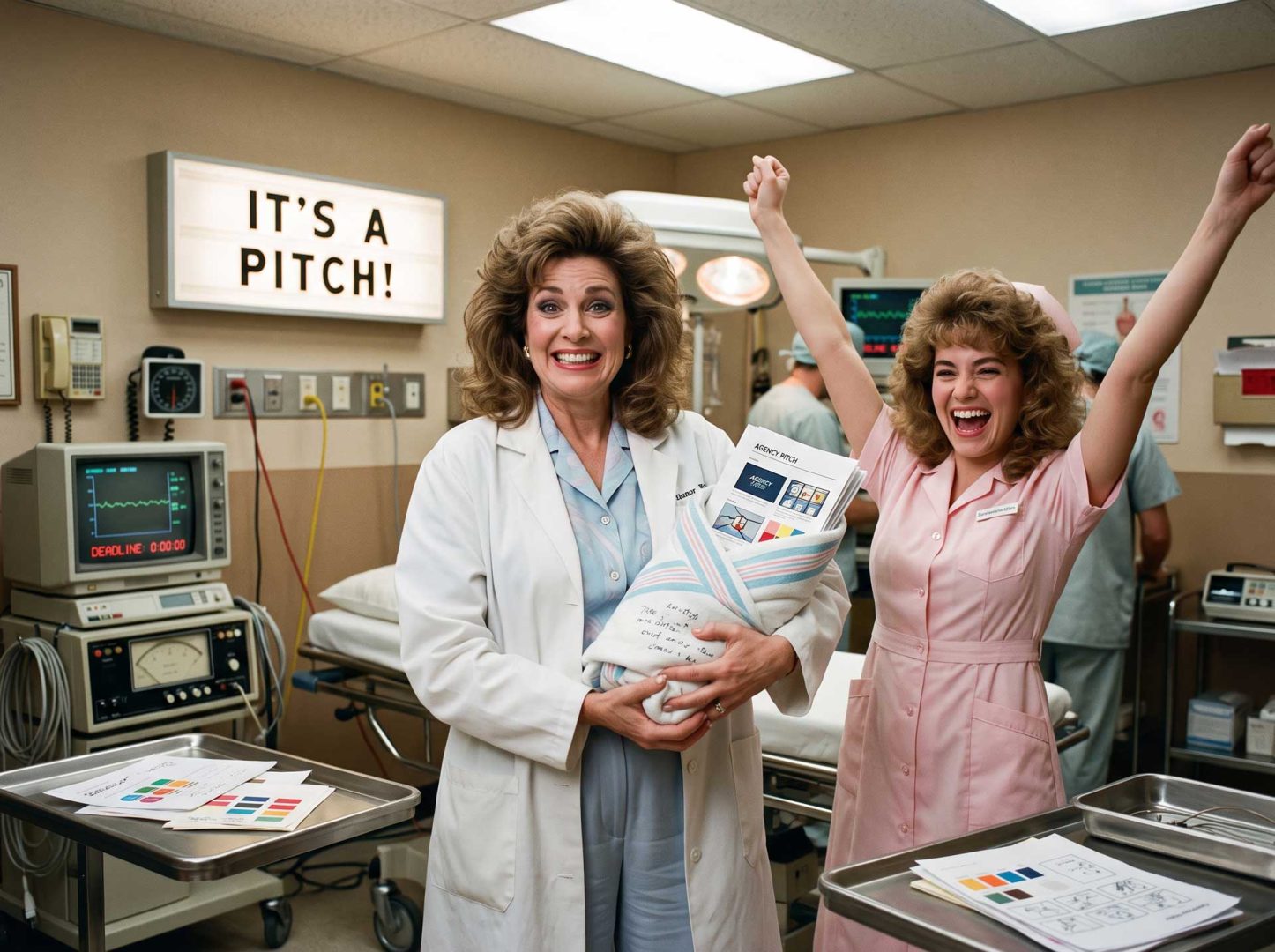
Still, I did not become a doctor. I chose the creative field, which, at the time, seemed like the calmer option. Cute. Because somehow, pitching can feel like a Fisher-Price trauma center for a PDF.
A reel request lands, and everyone jumps. A four-day pitch arrives, and the calendar explodes. A vague brief enters the room, and suddenly the whole team behaves like an entire family of raccoons needs rescuing before sunset. Pitching is creative work under pressure.
“A vague brief enters the room, and suddenly the whole team behaves like an entire family of raccoons needs rescuing before sunset.”
At its best, that pressure can be useful. It sharpens attention, creates momentum, and pushes people to make decisions. Good teams move. Good partners respond. Good ideas often need a little heat. But pressure is not the same as emergency.
Nobody is coding blue. Nobody is running into a burning building. Nobody is losing a patient. We are making films, campaigns, animations, decks, treatments, references, strategies, worlds, and ideas. Important work, yes. Life-changing, world-ending? No.
So why does pitching so often feel like the alarm has already been pulled before the project even starts? This is the strange emotional equation behind the pitching system. It turns pressure into emergency. It turns urgency into proof of commitment. It turns incomplete information into a test of endurance. It turns participation into a reflex.
The pitch comes in. The timeline is bad. The brief is partial. The budget is unclear. The review path is foggy. The team is already busy. And still, someone says: Let’s take a look. That sentence is where the machine starts humming. Because “let’s take a look” rarely means looking.
It means checking availability, pulling references, texting directors, calling producers, estimating something that has not been defined, asking people to hold dates, and opening a deck before anyone has fully agreed on what the opportunity actually is.
Most of the time, we do it before we know enough. We do it because the opportunity might be real. Because the client might be great. Because the agency relationship matters. Because someone else will say yes if we do not. Because this one may be worth it. Ufff. A lot of becauses for a process that still has very few answers.
That is how emergency culture keeps on going. This is not sustained by one villain, one bad client, one chaotic agency, or one desperate studio. It happens because everyone has learned the same reflex: move first, question later, protect the possibility, stay in the game. At this point, it is survival memory.
Some projects are genuinely urgent. Product launches move. Campaigns shift. Markets change. Clients face real pressure. Agencies inherit timelines they did not design. Studios receive the ask late because someone else received it late before them. That happens.
“In most industries, urgency costs extra. In pitching, it is treated as standard and assumed to be free.”
That said, it cannot be that every reel is needed in less than 24 hours, followed by three days of silence, only for every shortlisted team to get four days to build the pitch, followed by more silence. It cannot be that every brief arrives incomplete and every answer comes too late to shape the work.
At some point, this stops being the exception and becomes the operating condition. When everything is an emergency, urgency is no longer real. It is not a planning issue. It is a system design failure.
And because it feels urgent, the questions get postponed. We send the reel. We accept the NDA. We ask too little, too late. We treat the missing answers as part of the weather. Who has time to question the system when everyone is already running?
Pitching has adopted emergency behavior without emergency stakes. And somehow, the rush is built into the ask. In most industries, urgency costs extra. In pitching, it is treated as standard and assumed to be free.
WE LOVE PITCHING
Let’s change the way we play the game.
Follow Claus on LinkedIn and Instagram.
WE LOVE PITCHING: Let’s change the way we play the game.
DISCLAIMER: All images are AI-generated. If it feels real, uncomfortable, or a little ridiculous, it’s intentional. Artificially made. Human crafted.